
Interesting golf facts and a little history of golf
30 January 2026
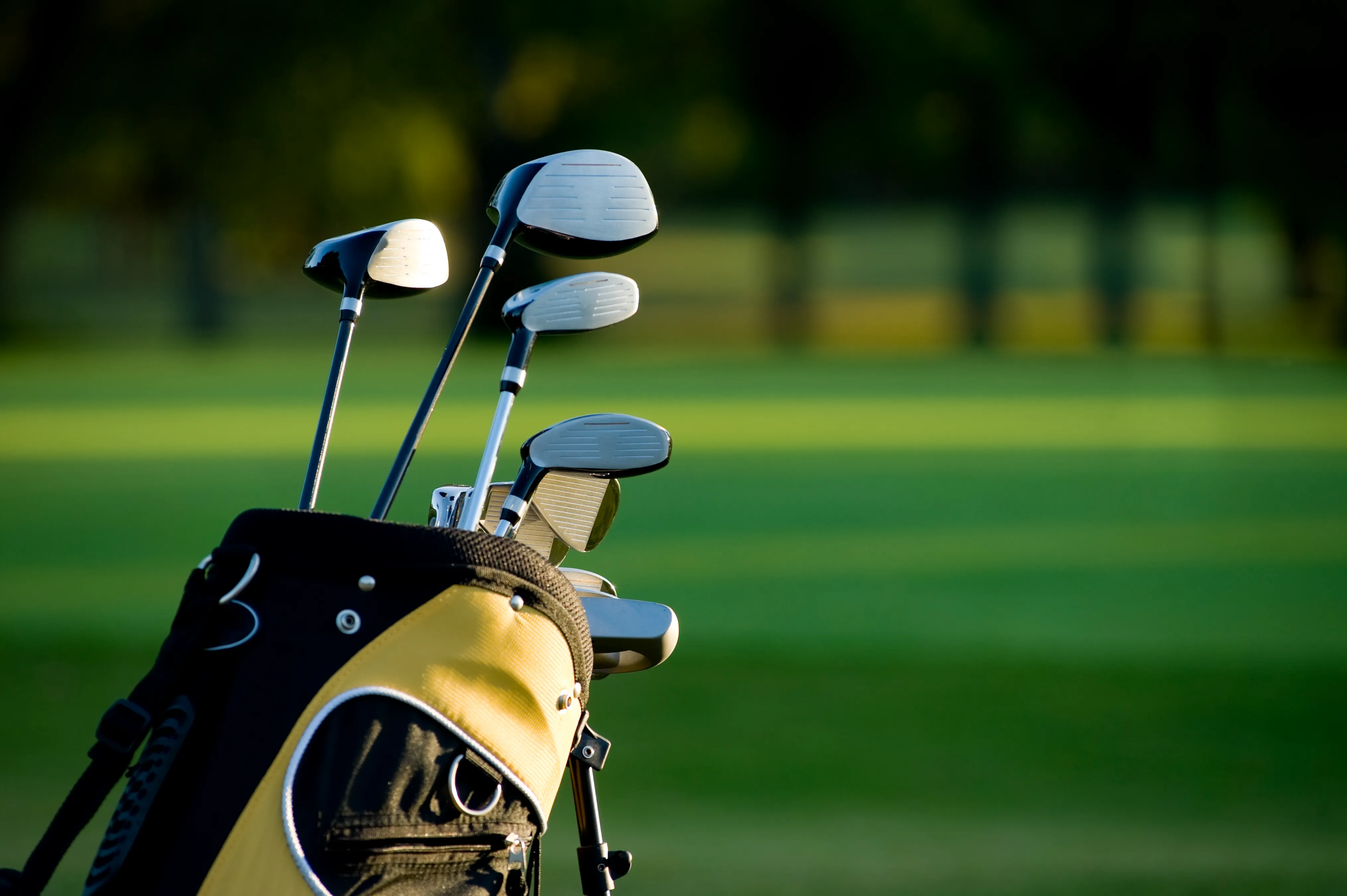
Like most sports, there’s far more than meets the eye when it comes to golf. There are so many interesting golf facts that are far from common knowledge, and others that serve as benchmarks for understanding and loving the sport.
Here, we’ll go through some of the top facts about golf you may never have heard of before. Because there’s no such thing as knowing too much about golf.
Keep these in mind next time you head out for a round. These facts might just impress your friends and playing partners.
Scotland: golf’s homeland
First things first, golf has been played for a really, really long time. The oldest professional golf competition, The Open Championship, was founded at Prestwick Golf Club in Scotland in 1860. This was some 11 years before the first FA Cup, won by the now-defunct Wanderers FC. Golf’s origins go back even further than that, though.
It was in the 15th century that golf – or a game which resembled it – was first played in Scotland in any kind of organised capacity. Of course, it looked rather different from the game we know now. There were no metal clubs, nor rubber-filled golf balls. Instead, wooden clubs were used to hit leather balls.
Around 300 years later, in 1744, the Gentlemen Golfers of Edinburgh devised the first official rules for golf, and the sport blossomed and ballooned in popularity from then on.
There’d be no Tiger Woods nor Rory McIlroy had it not been for the Scottish influence on the game’s foundations – even if the sport was banned in its homeland on multiple occasions. Most notable of these was perhaps the earliest instance, when King James II banned golf due to concerns that it was harming military service.
Alas, and indeed testament to the endearing nature of golf, each ban was short-lived. Phew.
Golf’s spread across the world

Unsurprisingly, the next country to become enamoured with golf was England. The Royal Blackheath Golf Club was the first to be founded in Scotland’s neighbouring country back in 1766. And there’s evidence of golf beginning to spread globally throughout the rest of the 18th century, sometimes through unsavoury means – the first African golf club, set up in Sierra Leone in 1770, was done so by slave traders.
There are records of golfing activity in the USA dating back to the 17th century, and clubs were established in France and India in the early 19th century.
It was in this Victorian era that golf truly began to take off outside the British Isles, culminating in the foundation of the second of the four majors we know today, in the form of the US Open’s inception in 1895. The PGA Championship and the Masters tournament followed suit in 1916 and 1934, respectively.
As of 2020, golf was played in 206 countries, and a 2023 participation report from the R&A found that over 60 million people worldwide actively play.
The evolution of equipment
Golf balls, as mentioned earlier, used to be leather and stuffed with feathers. Looking at today’s modern, rubber-filled balls, it really is quite hard to imagine. Of course, like all sports, golf's technology and equipment have come on leaps and bounds since the sport’s inception.
Rubber golf balls first appeared right at the end of the 19th century, and it was around this time that the first dimpled golf balls entered the market, too.
Then there are the clubs, which once resembled big wooden sticks, yet are now full of modern innovations. Even the use of metals such as steel is a significant improvement to what was used in the sport’s infancy, and indeed, much of its history.
Still, some traditions live on. Woods are still named after the material from which they were initially made, even if they’re now more commonly constructed from composite materials.
Many old products are collectors’ items now, too, and can fetch a pretty penny. An Andrew Dickinson putter from the 18th century sold for $181,000 at auction. So if acquiring a piece of history is up your street, make sure you’ve got deep pockets to fork out for one of the world’s most expensive golf clubs.
New clubs and equipment can also make a sizeable dent in your bank account. Tiger Woods’ ‘Tiger Slam’ clubs sold for over $5 million in 2022, which just goes to show that golf, just like any sport, has its celebrity appeal.
Who are the best ever golfers?
Everyone has heard of Tiger Woods. For people of a certain generation, his dominance has become utterly synonymous with the sport. Eighty-two PGA Tour wins and 15 major championship titles make up the CV of one of golf’s most talented and prolific winners.
From other eras, Jack Nicklaus has an enviable trophy cabinet. His first major title came in 1962, and his last in 1986. Now that’s longevity. His tally of 18 major titles makes him the most decorated golfer of all time in that respect, though his 73 PGA Tour wins put him third in that list behind Woods (of course) and Sam Snead.
Snead himself is joint-first with Woods for PGA Tour wins, with 82, and managed to win seven major titles, though the US Open always eluded him.
Rory McIlroy is probably the defining British golfer of the modern era with five major titles to his name, including one of each of the big four. But Sir Nick Faldo was the big name for previous generations, with six majors under his belt.
As for women’s golf, it’s hard to look past Dame Laura Davies as far as Brits are concerned, as she has the most ever Ladies European Tour wins with 45, and has four major titles. With 15 major titles, though, the USA’s Patty Berg still reigns supreme.
Miscellaneous golf facts

What is the 90% rule?
The 90% rule, as enforced on many courses, stipulates that your cart must spend at least 90% of the time on the cart path.
You can drive onto the fairway, but only for 10% of the time you’re playing. If your ball is a sizeable distance away, you can drive there and only there. No cruising.
As you might imagine, the 90% rule exists to protect the surface while recognising that a cart is a useful way to speed up the pace of play.
What are the three Ps in golf?
When it comes to putting, there are three Ps to bear in mind:
- Planning – when you assess terrain and establish your line.
- Prepare – when you practice your swing, gauging just how far the ball might break and how hard you need to hit it.
- Putt – put it all into practice.
This is a fairly rudimentary system, and there are far more caveats to putting than that, but it’s a good place to start as a general rule of thumb.
Why are there 18 holes in golf?
The answer to this takes us right back where we started. Scotland, and St. Andrews specifically. The club had only enough land for 18 holes, and, as a hugely significant golf course, the rest of the world eventually followed suit and copied it.
It was in 1857 that St. Andrews officially began using 18 holes, and in 1950, the rule book specified that this was to be the length of a course. As with many of these interesting facts about golf, we have Scotland to thank for the golfing landscape we know today.
Specialist golf insurance through Golf Care
Before your next round of golf, you may want to consider getting specialist golf insurance.
Through Golf Care, policies include Equipment Cover up to £7,500, Public Liability of up to £10m, and Personal Accident Cover up to £50,000. Get a quote online today.
Please note the information provided on this page should not be taken as advice and has been written as a matter of opinion. For more on insurance cover and policy wording, see our homepage.