
How to get rust off golf clubs
15 December 2025
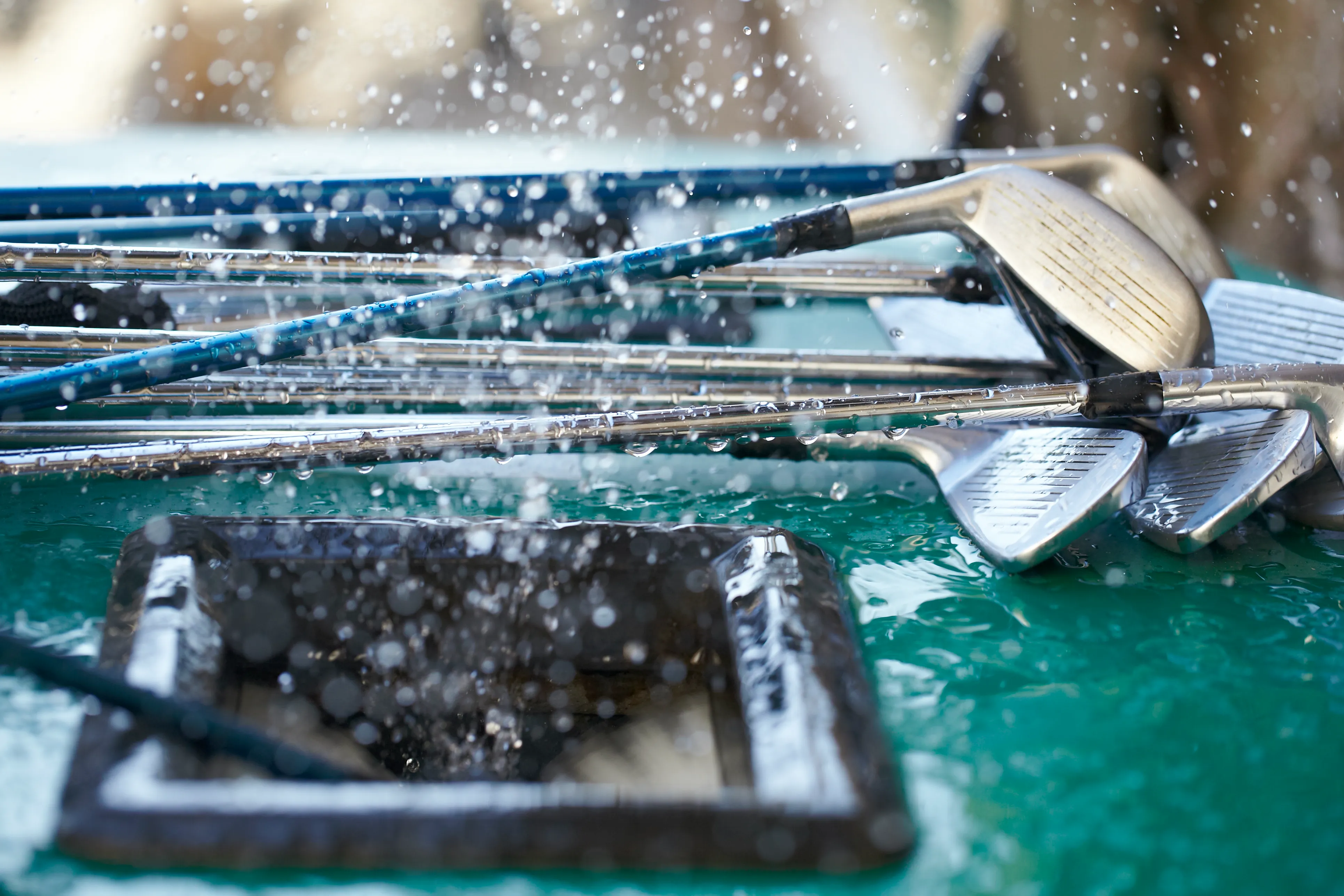
If you’re returning to golf for the first time in a while, or you’ve just left your clubs in storage for a little longer than you anticipated, there’s every chance you’ve come across the problem of a dirty, rusty golf club. But fear not! Getting rust off your clubs isn’t as arduous a task as it sounds, and it’ll save you from emptying your pockets for more expensive gear.
So, if you’ve found an old set and wondered how to get rust off a golf club, here’s what you need to do.
Cleaning your golf club
First things first, cleaning your golf clubs is just as important as removing rust from them. In fact, attempting to remove rust before first removing dirt and grime from your clubs is a counterintuitive task. You need to ensure your clubs are as clean as possible before tackling rust so that any excess moisture and dirty particles don’t get in the way of your main job.
To clean your dirty club, you’ll need:
- A bucket of warm (not hot) water
- A brush with soft bristles or a toothbrush
- A damp cloth
- Mild soap
- A towel
Soak your club
You’ll first need to fill a bucket with warm water and mix in a couple of drops of mild soap, creating a bubbly mixture. Ensure the water isn’t scalding hot, as this can cause damage to your clubs.
Next, place your clubhead into the soapy mixture and let it soak for approximately five minutes. The soaking process will help release any particles of dirt and grime from the club, allowing you to move on with the next steps. Be careful to ensure that only the clubhead is submerged in the water.
Scrub
Once the clubhead has been soaking for around five minutes, it’s time for some manual work. This will differ for each type of club.
For putters and wedges, use your brush to scrub the clubhead, removing any visible dirt. The grooves should be the focus of your attention, as this is where most of the grime will accumulate. Scrub gently to avoid damaging the clubface.
When it comes to irons and woods, you’re better off using a damp cloth instead of a brush to make sure no scratches are left on the clubs. With this cloth, wipe until you’re satisfied you’ve removed as much dirt as possible.
Rinse
You’ll likely still have some soapy residue left on the clubs when you’ve completed this step, so rinse the clubheads with clean, non-soapy water. A hose on a gentler setting would be ideal for this.
Dry
Now, you should have a wet but largely clean club. Take your towel and carefully dry your club to ensure there is no water or dampness left. What you don’t want is to begin the process of creating more rust. If the conditions allow, leaving your club outside in the sun for a short period will also aid the drying process.
Once it is scorched, it’s time to start thinking about getting rid of the rust from the club.
How to remove rust from a golf club
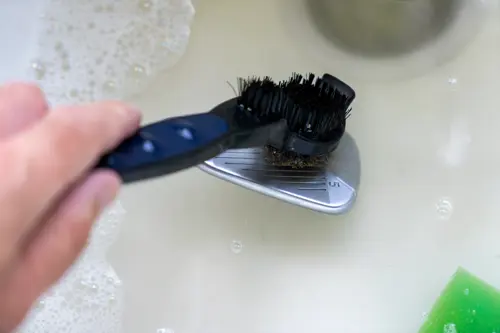
To remove rust from a golf club, you’ll need:
- White vinegar
- Fine steel wool
- A cloth
- A towel
- Water
Begin with vinegar
Your secret weapon in the fight against rusty golf clubs is white vinegar.
Rust is the process by which materials, including iron atoms, are exposed to both oxygen and moisture. Vinegar is an acetic acid. When used on rust, the hydrogen ions within the vinegar react with the iron oxides. This, in turn, creates iron acetate and water, which can very easily be removed from your club.
In short, vinegar helps remove rust.
Soak your cloth in vinegar
Your first port of call is to soak a cloth with vinegar and place it on and around the areas of your club affected by the rust.
The amount of rust present determines how long you need to leave the cloth on the club. Lighter rust may require only an hour or two to remove. But you may need to keep heavy rust in contact with the vinegar overnight.
Scrub with steel wool
Once the vinegar has had time to react with the rust, it’s time for you to take your steel wool to the area. Scrub lightly, as you don’t want to scratch or leave any damage on the clubface.
You can also use more vinegar in this step by soaking the steel wool in vinegar before scrubbing. This might not be necessary, especially if there’s only minimal rust.
If the rust is particularly thick and stubborn, you can also use sandpaper to get rid of it.
Of course, you need to apply some pressure to the clubhead when scrubbing, but check you’re not scratching or damaging it as you go. If you’re concerned you might be scrubbing too hard, try being a little gentler. It’s crucial to find the right balance to remove rust without damaging the club itself.
Rinse and dry
When you’re satisfied that you’ve finished the job and removed the rust, rinse your club and dry it with a towel again, just as you did when cleaning. Again, leaving the club in sunlight can help ensure it’s fully dry.
There would be nothing worse, at this point, than getting more rust on the club. Therefore, be sure to thoroughly dry the area to ensure no moisture remains.
Can you use WD-40 instead of white vinegar?
Some people use WD-40 to clean their golf clubs instead of vinegar. This can be an easier way to tackle the problem and is a good option if you’re short on time. But it’s unlikely to get rid of the rust altogether. Using the white vinegar method described above is more advisable.
How to prevent rust from appearing in the future
Ultimately, removing rust from your golf club is a process you’ll never have to do again if you prevent it from getting there in the first place.
As mentioned earlier, rust appears when iron reacts with oxygen and moisture. Regularly cleaning and drying your clubs is essential to prevent any rust from appearing.
When storing your clubs, keep them in a cool, dry place. A damp environment will act as a catalyst for rust, so keep an eye on the conditions where you leave your clubs when they’re not in use.
Specialist golf insurance through Golf Care
Even if you take great care of your golf clubs, there’s always a chance that your clubs can become lost, stolen or damaged. That’s why you may want to consider protecting yourself and your gear with specialist golf insurance.
Through Golf Care, policies include Equipment Cover up to £7,500, Public Liability of up to £10m, and Personal Accident Cover up to £50,000. Get a quote online today.
Please note the information provided on this page should not be taken as advice and has been written as a matter of opinion. For more on insurance cover and policy wording, see our homepage.