
What is a golf mud ball?
29 May 2026
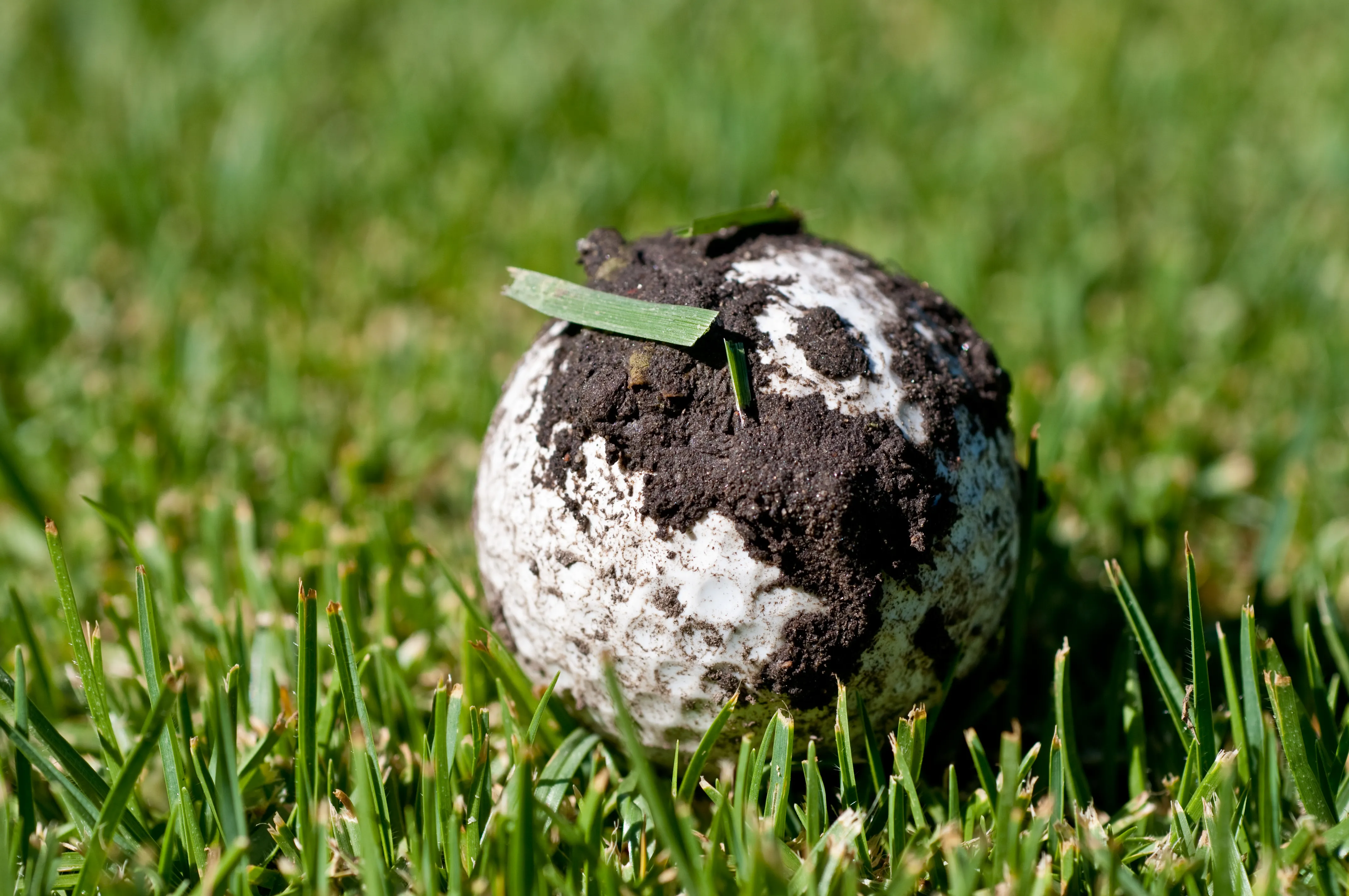
If you’ve ever played golf in the UK, you’ll know that wet conditions are to be expected, even outside the winter months. But this can cause bigger issues than simple annoyance, because there’s nothing players hate more than a golf mud ball, which can disrupt an otherwise great round. And if you’ve watched major competitions over the years, you’ll know this is true for the pros too.
The likes of Jordan Spieth and Scottie Scheffler have publicly bemoaned the dreaded mud ball over the last year or so. But if you’ve never encountered one before, what exactly is a golf mud ball? Here you’ll discover what a golf mud ball is, how flight is affected and what you can do to handle them.
What is a mud ball in golf?
In short, a mud ball is a ball with a noticeable amount of mud or debris attached, which affects its flight and can cause it to veer erratically.
This is why golfers in the UK might be more accustomed to this particular problem. In the colder and wetter months, this is to be expected. And there are rules to help golfers out. Many local rules allow preferred lies in the winter, so a golfer who discovers their ball is covered in mud can lift it, clean it, and place it back within a certain range (typically around 6 inches).
However, with summer rules, you can’t expect to be afforded that much grace. So, if the conditions are wet in those months of the year, mud balls are often a frustrating reality of the game and something you need to learn to deal with.
How do mud balls affect your shot?
The main issue with mud balls is that they alter the ball's spin, resulting not only in a lack of distance but also a noticeable change in direction in flight.
The following is true as a general rule:
- Mud on the left of your ball will cause the shot to veer off to the right
- Mud on the right means the ball will go further left
- Mud on top of the ball will cause it to fly a little lower
- Mud on the bottom of the ball means it will go higher
The extent to which this is, of course, dependent on other environmental factors and, most importantly, how much mud is stuck to your ball. A tiny speck of mud probably won’t have as drastic an impact as a big clump.
Unfortunately, it’s not a precise science, which is exactly what makes mud balls so frustrating. As mentioned before, a mud ball will move erratically and unpredictably, taking an element of skill out of the game. No matter how proficient you are when the golf ball is clean, mud balls are bound to make things a little more random.
That said, there are techniques you can use to mitigate this, even if you can’t stop it altogether.
How to hit a mud ball
Realigning your shot is one of the most important steps in dealing with a mud ball. If, for example, your ball has mud on its right and will subsequently veer left, you can try to counteract this by aiming further to the right. This way, your shot is more likely to end up closer to where you originally intended.
You may also need to assess which golf club to use to compensate for a lack of distance. A less lofted club than you would originally use can help you hit the ball further, but this can create more room for variation on the shot. A club with more loft, like a wedge, will send the ball a shorter distance, but a more controlled one. It might also help some of the mud fall off upon impact if it doesn’t in the air.
However, the unfortunate truth is that the ball’s movement is going to be unpredictable. The mud might fall off by itself, but on some occasions, it’s best to try and get less distance on your shot to instead lose some of the mud on impact. As a general rule, the longer the shot, the more chance there is for variation – so it’s best to keep your shot short and controlled. Other times, the mud will change the ball’s trajectory significantly, and sometimes it’s hardly noticeable.
Even professionals struggle to come to terms with the fact that preparing for mudballs is virtually impossible. Collin Morikawa said in 2022: “It’s a guess, it’s an absolute guess, and it sucks.”
It can also be a surprise. If you’ve ever heard a golfer shout ‘mud ball!’ after a shot, it’s often because they weren’t expecting the ball to travel as it did.
So, there are techniques you can use to try and help deal with the effects of a mud ball, including realigning, changing clubs and playing conservatively. But ultimately, mud balls create an element of chance which golfers just don’t want.
What do the rules say?
As previously mentioned, the PGA is fairly unforgiving here. In the summer months in particular, you’re expected to hit the ball as it is. That means you can’t clean your ball or reposition it.
This caused a stir in May 2025, when wet conditions at Quail Hollow led Scottie Scheffler to say: “It’s frustrating to hit the ball in the middle of the fairway and get mud on it and have no idea where it’s going to go”.
However, local rules can allow for preferred lies in certain circumstances, and winter rules in the UK in particular acknowledge that – in a wet climate – mud balls are common and should be avoidable on the fairways at least.
In some arenas, though, there are also unwritten rules, such as at Augusta, where it’s not the done thing to criticise conditions (even when mud balls do happen).
Ultimately…
At the end of the day, mud balls are a frustrating but often unavoidable part of golf. If the rules allow you to lift, clean and place, then you’re in luck. If not, you can use these tips to help mitigate the effects of a mud ball. Unfortunately, though, they’re about as unpredictable as anything in any sport.
Specialist golf insurance through Golf Care
Now you know what a mud ball is and how to take them on when they occur, you may want to consider protecting yourself and your golf equipment with specialist golf insurance. Get a quote online today.
Please note the information provided on this page should not be taken as advice and has been written as a matter of opinion. For more on insurance cover and policy wording, see our homepage.