
Golf tee sizes: What size tee should I use?
03 March 2026

Whilst other kinds of golfing gear usually hog the limelight, the humble golf tee is an important piece of kit. Understanding which golf tee to use in which situation, especially what height of tee, is a vital part of the game. And knowing which tee to reach for will help you get the most out of your rounds.
In this guide to golf tee sizes, we’ll explain when you’ll be able to use a tee, what lengths and materials golf tees come in, and how to choose the right golf tee size for your shot. So you’ll be confident about your tee game the next time you step into the tee box.
When should you use a golf tee?
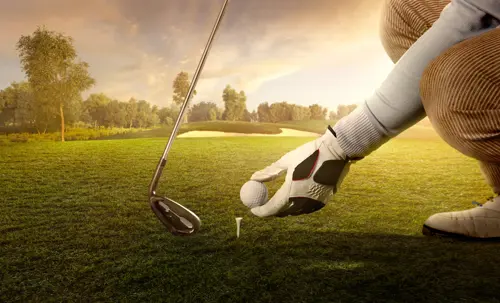
You’ll use a tee on your first shot on each hole. As you stand at the tee box, or teeing area, for the next hole, you’ll place your tee in the designated space – this is why the first stroke on a hole is called ‘teeing off’.
But why do you use a golf tee? Golfers use tees to elevate the ball to provide a raised target that’s unimpeded by turf, allowing for a clean and consistent hit that improves the chances of maximising distance and control. It can also minimise damage to the turf and even to your clubhead.
If you’re using a driver for your first stroke, a tee is mandatory. If you’re on a lower par hole, like a par-3 hole, and are planning to use a different club (say an iron or a hybrid), then a tee isn’t strictly required. But most golfers will still use one anyway due to the advantages a tee offers.
Can you use a golf tee after your first stroke?
No. After you’ve teed off and your ball is on the fairway, you’ll have to play from where your ball lies without interfering with it.
What materials do golf tees come in?

Whilst golf tees are relatively straightforward, they’re available in a range of materials as well as sizes, including:
- Wood: The most traditional golf tee material.
- Plastic: A variety of plastics are used, but they are generally more durable than wooden tees. Plastic golf tees are by far the most popular choice.
- Bamboo: Offering a similar natural feel to wooden tees, but with the durability of plastic tees. Plus, they’re biodegradable.
- Rubber: Soft tees with a flat base for a bottom rather than a point, which are most often used on driving ranges.
What sizes do golf tees come in?
When we refer to golf tee size, we’re talking about the length of the tee, typically measured in inches. Golf tees come in a wide range of lengths, but usually in a set of standard sizes:
- 1.5 inches (1½ inches)
- 1.75 inches (1¾ inches)
- 2.25 inches (2¼ inches)
- 2.75 inches (2¾ inches)
- 3.25 inches (3¼ inches)
- 4 inches
Generally, smaller tees are suitable for shorter clubs and shorter holes, as per this standard golf tee size chart:
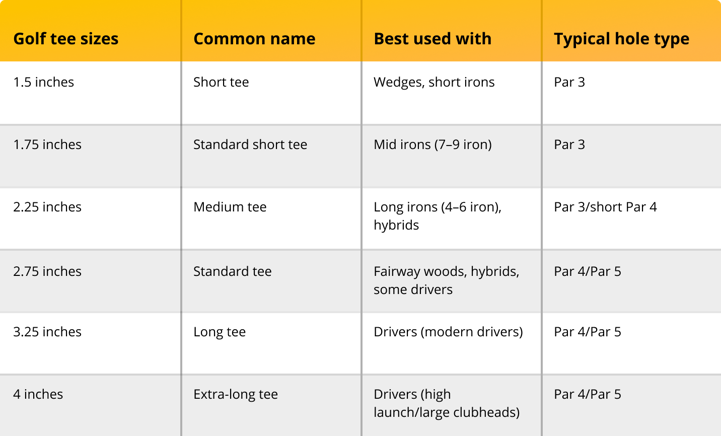
The above chart is a general recommendation only, and many players may have different preferences for the size of tee they use in each situation.
How to choose the right golf tee size?
Choosing the right size tee for the golf club you’re about to use to tee off with is part science, part art. You should consider:
- The type of club and length of the drive: As a general rule, the taller the tee, the longer the shot. With taller tees, the ball sits higher, allowing for a lower angle of attack that’s suitable for driving a ball further down the fairway. Shorter tees allow better control for shorter shots with clubs like hybrids, irons, and even wedges in some situations.
- Your own personal preferences: Tee sizes for respective golf clubs are recommendations – nothing more. Many golfers will find they prefer different-sized tees than those usually recommended. The tee you use is really up to you.
Ultimately, the size of tee you use when teeing off will depend on both the club you’re holding and your own game. The great thing about golf tees is that they’re relatively inexpensive, so you can take the time to try different types and sizes in different situations to find which combination works best for you.
Specialist golf insurance through Golf Care
Whilst having the right golf tees with you is essential, before you head out on the course for your next round, you may also want to consider protecting yourself and your golf equipment with specialist golf insurance. Get a quote online today.
Please note the information provided on this page should not be taken as advice and has been written as a matter of opinion. For more on insurance cover and policy wording, see our homepage.